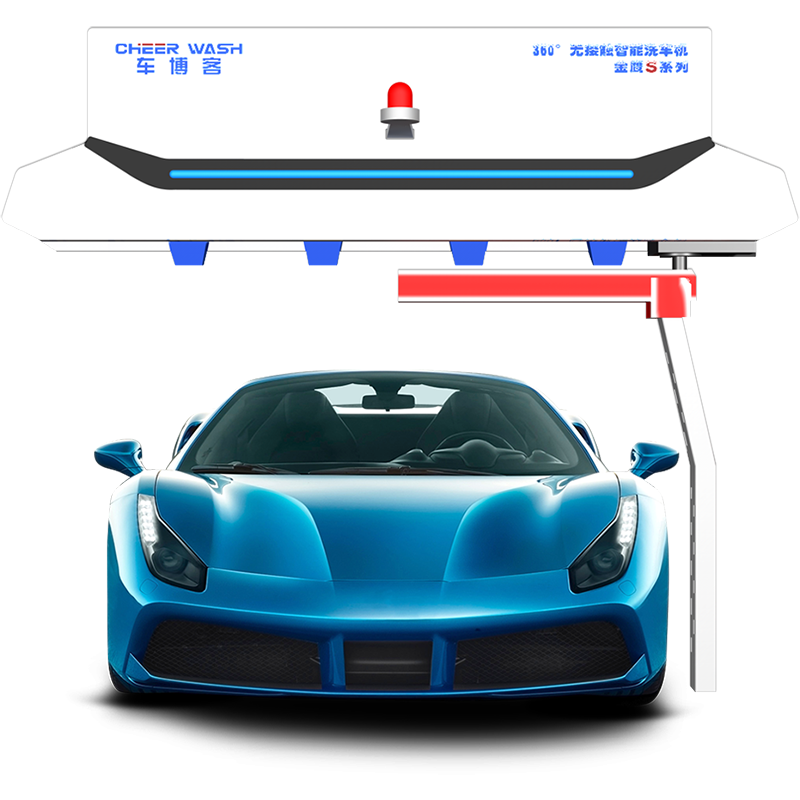
The modern car wash industry moves incredibly fast. A reliable touchless car wash machine serves as the backbone for successful automated facilities today. These advanced systems deliver rapid, consistent results without any physical contact.
Many operators struggle to balance strong cleaning power with ultimate vehicle safety. A clear shift toward high-pressure, chemical-based cleaning now helps preserve the delicate clear coat on modern vehicles. Selecting the incorrect equipment often leads to unexpected bottlenecks or excessive utility waste.
We will explore how different machine models match varying site constraints. This comprehensive touchless car wash equipment comparison will help you accurately evaluate throughput and daily operational intensity. You will learn exactly how to choose the right system for your specific business goals. Our guide breaks down the essential features of each equipment tier.
Key Takeaways
**CL500:** Optimized for low-to-medium volume sites prioritizing entry-level efficiency and budget-conscious deployment.
**CL600:** The "workhorse" model, balancing high-pressure output with consistent uptime for high-traffic environments.
**CL800:** Engineered for premium, high-speed throughput with advanced water-foam separation and intelligent contour tracking.
**Selection Strategy:** Focus on daily wash capacity, maintenance overhead, and integration capabilities rather than initial equipment cost alone.
1. Defining Your Operational Requirements: Throughput and Reliability
You must accurately assess your daily vehicle volume before purchasing equipment. Evaluating your site's peak and off-peak demand prevents costly under-provisioning. Under-provisioning creates long lines during weekend rushes. Over-provisioning ties up capital in unused capacity. You should categorize your traffic into hourly units to understand true demand. A site handling twenty cars an hour requires different mechanics than one processing fifty.
Uptime serves as a critical financial metric in automated facilities. Equipment robustness directly impacts your revenue consistency. Every hour a bay sits empty due to repairs, you lose money. Industrial-grade components resist wear better under heavy loads. You should view reliability as your primary defense against revenue leakage.
You also need to factor in your specific operational constraints. Every site presents unique physical and regulatory challenges. Consider these three critical facility limitations:
Bay Dimensions: Your wash bay must accommodate both the machine framework and the vehicle. Measure clearance height, bay length, and swing radius carefully.
Water Reclamation Requirements: Many local municipalities mandate strict water recycling. Your chosen equipment must integrate seamlessly with existing filtration and reclaim tanks.
Power Supply Limitations: High-pressure pumps demand significant electrical draw. Verify your site supports the necessary three-phase power before installation.
2. CL500: Efficiency for Emerging and Compact Sites
The CL500 targets a specific operational profile. It fits perfectly into smaller footprint locations. Many operators also use it for secondary site upgrades. If you manage a gas station or a convenience store, this model provides an excellent supplementary profit center. It requires minimal space while still delivering professional results.
This model features a streamlined core feature set. You get essential high-pressure wash cycles. It also includes highly reliable chemical delivery systems. The design eliminates unnecessary complexity. You benefit from straightforward venturi injectors and standard spray manifolds. These elements ensure consistent chemical application across the vehicle surface.
The implementation reality of the CL500 appeals to conservative budgets. You face a lower upfront capital investment. In return, you manage moderate maintenance cycles. Standard wear parts like nozzles and hoses require routine checks. However, the simplified engineering makes these replacements fast and inexpensive.
We consider the CL500 a strategic fit for new operators. It serves as a proven, standard entry point into the touchless space. You can build a loyal customer base without overextending your initial budget. It delivers a safe, friction-free wash that meets standard consumer expectations.
3. CL600: The Mid-Range Workhorse for Consistent Performance
The CL600 acts as the ultimate mid-range workhorse. We see this target profile excel in high-traffic retail locations. These environments demand a strict balance of speed and durability. Busy standalone wash centers benefit heavily from its reinforced architecture. It processes vehicles quickly without sacrificing wash quality.
You will notice significant upgraded capabilities compared to the CL500. The CL600 features enhanced pump performance. It pushes higher water volumes at sustained pressures. It also utilizes improved nozzle articulation. The spray arms adjust dynamically to vehicle shapes. This targeted high-pressure application breaks down stubborn road grime faster.
Maintenance considerations drive the design of the CL600. Improved component accessibility allows for rapid serviceability. Technicians can reach critical valves and sensors without dismantling the main frame. This thoughtful layout dramatically reduces operational downtime. To maximize your uptime, follow these maintenance best practices:
Inspect and clean high-pressure pump filters weekly.
Calibrate chemical dosing valves at the start of every season.
Grease all articulating arm bearings monthly.
Run a full diagnostic cycle during off-peak hours.
The CL600 provides excellent scalability. Its framework supports reliable, long-term operations in highly competitive markets. You can comfortably scale your marketing efforts. The machine will easily handle the resulting influx of new customers.
4. CL800: Precision Engineering and Advanced Cleaning Technology
The CL800 represents the pinnacle of modern wash engineering. Its technical differentiation centers on advanced fluid management. The system uses highly sophisticated water foam separation technology. This isolates wash chemicals from rinse water at a granular level. You optimize your chemical efficacy dramatically. You also reduce unnecessary water waste during changeover cycles.
Precision sensing sets this machine apart from standard models. The CL800 utilizes intelligent contour tracking. Ultrasonic and photoelectric sensors map each vehicle in real time. The wash arm maintains a perfect distance from the vehicle surface. You minimize dwell time while maximizing cleaning coverage on complex shapes. It easily cleans large SUVs and low-profile sports cars equally well.
This premium output delivers a superior, streak-free wash. High-quality reverse osmosis rinses integrate flawlessly. This exceptional finish supports higher per-wash pricing. Customers willingly pay premium rates when they see flawless results. You can easily justify top-tier wash packages.
We must analyze how higher build quality offsets long-term operational expenses. The CL800 utilizes variable frequency drives (VFDs) and ultra-efficient manifolds. Over a five-year cycle, these components drastically reduce operational energy and chemical costs. The heavy-duty stainless steel frame resists corrosive wash environments. Your long-term financial efficiency improves significantly.
5. Comparative Evaluation: Selecting the Right Equipment
Selecting the correct model requires a structured decision matrix. You need to compare the CL500 vs CL600 vs CL800 objectively. Throughput capacity metrics help you understand units-per-hour capabilities. Technology stack comparisons reveal the precision of chemical delivery and sensor sophistication. Finally, you must evaluate serviceability, including repair ease and parts availability.
Wash System Specification Matrix
Feature Category
CL500 Model
CL600 Model
CL800 Model
Target Throughput
Low to Medium Volume
High-Traffic Retail
Premium High-Speed
Sensor Technology
Standard Proximity
Enhanced Articulation
Intelligent Contour Tracking
Chemical Delivery
Standard Injection
Precision Manifolds
Advanced Separation
Serviceability
Basic Access
Rapid Access Modules
Predictive Diagnostic Capable
Risk mitigation plays a crucial role in equipment selection. You must avoid common pitfalls. Mismatched pump sizing leads to poor cleaning or excessive wear. Inadequate water pressure for your regional climate causes major failures. For example, winter road salt requires higher impact pressure than summer dust. You must size your utilities correctly before installation.
Compliance and safety remain non-negotiable. Ensure all models meet local safety standards for autonomous vehicle processing. Your equipment must feature emergency stops, breakaway arms, and fault-tolerant software. These safety measures protect both the customer vehicles and your business reputation.
6. Conclusion: Aligning Equipment to Business Goals
The journey from entry-level efficiency to industrial-grade throughput requires careful planning. The CL500 offers a safe, affordable starting point. The CL600 acts as a reliable daily workhorse. The CL800 delivers unmatched precision and premium finishes. Each tier serves a specific business model.
We strongly recommend auditing your specific site capacity before finalizing a purchase. Measure your bay, check your electrical service, and track your traffic patterns. Data-driven decisions prevent costly installation headaches. You want your equipment running smoothly from day one.
Finally, encourage a long-term view for your facility. Prioritize serviceability and component longevity over temporary capital savings. High-quality parts reduce your daily headaches. Consistent, reliable operation builds consumer trust. A dependable wash bay ultimately secures your market share and drives ongoing profitability.
FAQ
Q: How does water foam separation in the CL800 improve cleaning results?
A: It isolates concentrated cleaning foam from heavy rinse water inside the delivery lines. This prevents chemical dilution right before application. The foam clings better to the vehicle, increasing surface contact time. It breaks down dirt faster and rinses away cleaner.
Q: Which model is best for a facility with high seasonal peak traffic?
A: The CL600 or CL800 models handle seasonal surges best. They feature heavy-duty pumps and faster articulating arms. These upgrades provide the necessary speed to process long lines quickly. You prevent customer walkaways during your busiest operating months.
Q: Can I upgrade from a CL500 to a CL800 in the future?
A: Yes, but it requires careful infrastructure planning. While the bay size might accommodate both, the CL800 requires different utility setups. You will likely need to upgrade your electrical panels, water supply lines, and reclaim systems to support the higher throughput.
Q: What are the primary maintenance differences between these models?
A: The CL500 requires routine standard maintenance like nozzle checks and filter cleaning. The CL600 introduces easier modular access for rapid part swaps. The CL800 shifts toward higher-tier predictive service needs, relying on advanced diagnostics to alert you before parts fail.
Q: Does a touchless car wash machine inherently reduce vehicle damage risk?
A: Yes. Friction-free cleaning technology entirely eliminates physical contact with the vehicle exterior. It uses high-pressure water and specialized chemistry instead of spinning brushes. This completely removes the risk of scratching the clear coat or tearing off loose vehicle accessories.