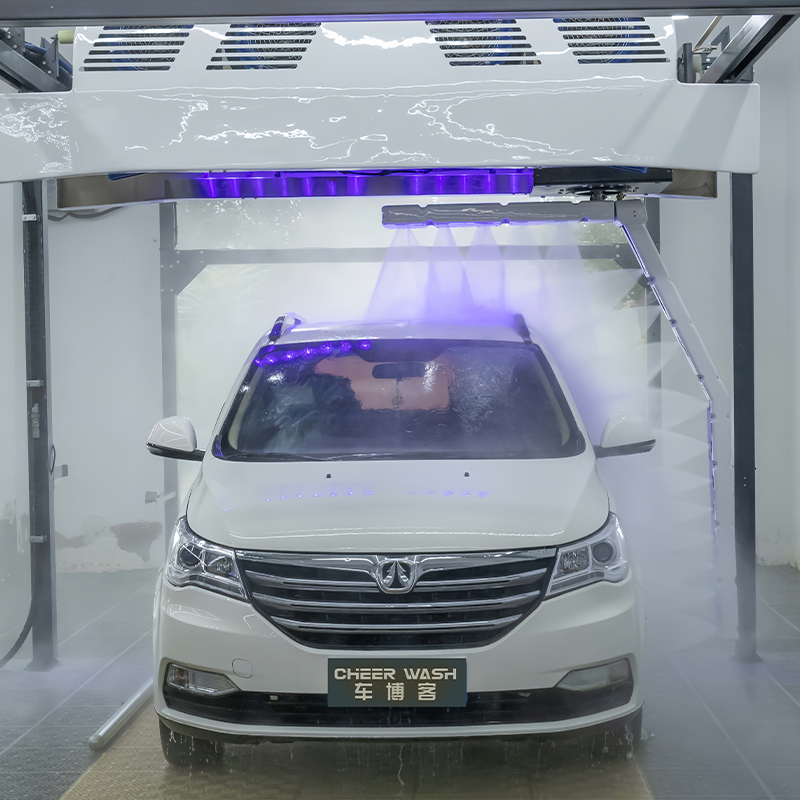
High-volume wash operations depend entirely on mechanical precision. A millimeter of gantry misalignment or a delayed sensor response can result in catastrophic vehicle damage, liability claims, and prolonged facility downtime. Gantry systems rely on a complex network of floor rails, travel wheels, and limit switches to map and navigate vehicle contours safely. Neglecting the inspection of these foundational components leads to track derailment, false sensor faults, and compromised wash quality, directly impacting the profitability and economical operation of the facility. Establishing a rigorous, evidence-based inspection protocol for gantry rails and limit switches is non-negotiable for maintaining maximum uptime and meeting strict safety standards. This guide breaks down the technical evaluation of gantry infrastructure, component lifespans, and risk mitigation strategies for modern wash systems.
Precision Dictates Safety: The safe operation of a touchless car wash machine relies on strict rail leveling tolerances and instantaneous limit switch responsiveness to prevent gantry-to-vehicle contact.
Corrosion is the Silent Failure Point: High-pH and low-pH chemicals used in wash cycles accelerate wear on anchor bolts, track surfaces, and mechanical switches, requiring specialized preventative maintenance.
Proactive vs. Reactive Economics: Routine visual and physical inspections of gantry travel limits drastically reduce long-term operational expenses by preventing derailments, extending the life of drive motors, and optimizing wash throughput.
Data-Driven Calibration and Liability Defense: Modern systems require regular auditing of sensor data against physical end-of-travel limits to ensure safety overrides function correctly under load, providing critical documentation to defend against false vehicle damage claims.
The Role of Gantry Infrastructure in a Touchless Car Wash Machine
The gantry bridge relies entirely on its rail system for mechanical stability. The entire weight of the wash structure transfers directly through the travel wheels onto the floor tracks. These rails bear immense dynamic loads during operation. High-pressure water pushes against the frame, creating lateral stress. Wind loads affect outdoor installations, adding unpredictable resistance. The rails must remain perfectly parallel to support these forces. Any deviation causes the gantry to bind. Binding increases friction and strains the 3-phase AC drive motors. The movement of the wash bridge depends on a flawless track surface.
An integrated touchless wash system uses the rail path as a fixed mathematical baseline. The programmable logic controller (PLC) calculates the exact distance to the vehicle based on this baseline. The system applies high-pressure water accurately because it knows its exact position in the bay. It dispenses chemicals without physical vehicle contact. The rails provide the necessary physical reference point. If the rails shift even a fraction of an inch, the PLC calculations become inaccurate. Inaccurate positioning leads to poor wash quality, missed target areas, or accidental collisions with oversized mirrors and trailer hitches.
Maintaining optimal rail conditions directly impacts wash throughput. Smooth rail travel allows the system to operate at maximum designed speeds. The gantry handles varying vehicle sizes efficiently. High-volume fleet demands pass through without bottlenecking. Unobstructed tracks prevent false safety stops that require manual resets. The drive motors consume less amperage when friction remains low. This efficiency keeps the wash bay operating profitably during peak hours. When you run 40 cars an hour, you cannot afford a five-minute reset because a wheel slipped on a dirty track.
Neglected rails and limits carry severe operational risks. Unexpected downtime halts revenue generation immediately. Track friction causes premature drive motor burnout and destroys gearbox seals. Replacing a drive motor requires hours of labor and heavy lifting equipment. Sensor failure correlates directly with customer vehicle damage. A failed limit switch allows the gantry to over-travel. The bridge strikes the vehicle or the building structure. Liability claims from these incidents destroy facility profitability. Component failure costs far exceed the expense of routine inspections. A well-maintained Touchless Car Wash Machine requires constant vigilance regarding its travel path.
Establishing Baseline Success Criteria for Gantry Operations
Industry-standard specifications dictate strict track parallel alignment. Installers must level the rails perfectly during initial setup, but concrete slabs settle over time. Maintenance technicians must verify this leveling regularly. Track deviation tolerances remain incredibly tight. A deviation of just three millimeters causes the gantry to crab diagonally. Diagonal dragging wears out wheel flanges rapidly. The gantry binds during travel, causing the variable frequency drives (VFDs) to spike in amperage and fault out. Technicians use laser levels to confirm track straightness. They measure the diagonal distance between rail ends to ensure perfect squareness across the entire bay length.
Travel wheels and anti-tilt rollers require specific evaluation criteria. Technicians must measure flange wear accurately using digital calipers. They check bearing play using dial indicators mounted to magnetic bases. Flange thickness must not drop below manufacturer minimums. Worn flanges allow the wheel to climb the rail. This climbing action precedes a full derailment, which can drop a 2,000-pound bridge onto a customer's car. Anti-tilt rollers must maintain a specific gap from the rail lip. Too much gap allows the gantry to rock violently during high-pressure cycles. Too little gap causes constant friction and premature bearing failure.
Proximity sensors and limit switches demand low latency. Limit switch actuation must occur within milliseconds of contact. Technicians measure end-of-travel stopping distances carefully. They run the gantry at full operational speed toward the limit. They trigger the switch and measure how far the bridge travels before stopping completely. The gantry must stop well before hitting the physical end blocks. Acceptable latency ensures the safety overrides function correctly under heavy loads. If the VFD braking resistors are failing, the stopping distance increases, signaling an impending crash.
Industry safety standards require regular inspections of gantry car wash machines. Manufacturer mandates outline specific maintenance intervals. Adherence to these baselines ensures operational legality. Documented inspections protect the business from negligence claims. If an accident occurs, maintenance logs prove the facility exercised due diligence. Insurance companies often require these records during claim investigations. You need hard data to prove your equipment was operating within safe parameters.
Component
Inspection Metric / Tolerance
Testing Method
Failure Consequence
Floor Rails
< 3mm deviation over total length
Laser alignment and diagonal measurement
Gantry crabbing, VFD faults
Travel Wheels
Flange thickness > OEM minimum
Digital caliper measurement
Track derailment, bridge drop
Anti-Tilt Rollers
1mm - 2mm gap from rail lip
Feeler gauge measurement
Bridge rocking, bearing failure
Limit Switches
< 50ms actuation latency
PLC input monitoring during manual trigger
End-block collision
Anchor Bolts
Torqued to OEM specification (e.g., 80 ft-lbs)
Calibrated torque wrench testing
Rail shifting, concrete spalling
Step-by-Step Gantry Rail Inspection Protocol
A systematic framework ensures thorough rail inspections. Technicians must walk the entire length of both tracks. They look for specific signs of mechanical degradation. Track pitting indicates chemical corrosion from aggressive presoaks. Weld fractures compromise structural integrity and require immediate re-welding by a certified professional. Uneven wear patterns on the rail head indicate gantry crabbing. Crabbing means the bridge drags diagonally across the bay. This dragging destroys travel wheels quickly. Technicians must document any surface anomalies immediately and schedule corrective action.
Clean the Track Surface: Remove all sediment, ice, and debris from the rail path using a high-pressure lance. Debris causes wheel slippage and increases motor amperage draw.
Inspect the Steel Rails: Check for pitting, rust scaling, and weld fractures. Run a straight edge along the rail head to detect uneven wear or cupping. Use a wire wheel on an angle grinder to clean severe pitting.
Evaluate Anchor Bolts: Test every anchor bolt with a torque wrench. Loose bolts allow the rail to shift under dynamic loads. Replace any bolts that spin freely in the concrete.
Check Grout Integrity: Inspect the concrete foundation beneath the rails. Look for degrading epoxy or cracked grout. Cracks indicate structural movement and require epoxy injection repairs.
Measure Wheel Flanges: Use calipers to measure the thickness of the travel wheel flanges. Compare readings against OEM specifications and replace wheels in pairs to maintain level travel.
Test Anti-Tilt Rollers: Verify the gap between the anti-tilt rollers and the rail lip. Ensure the bearings spin freely without excessive play or grinding noises.
Monitor Motor Amperage: Run the gantry back and forth. Monitor the drive motor amperage on the PLC diagnostic screen. Spikes in amperage indicate track friction or binding.
The concrete foundation requires close attention. Anchor bolts secure the rails to the floor. High-pressure water and harsh chemicals degrade the epoxy holding these bolts. Cracked grout compromises rail stability. Dynamic loads push and pull on loose bolts. The rail shifts slightly with every wash cycle. This micro-shifting eventually misaligns the entire system. Technicians must re-torque bolts and repair failing grout promptly. If the concrete is heavily spalled, you may need to cut out the section and pour a new footer.
Debris clearing remains an operational necessity. Sediment builds up on the tracks daily from muddy trucks and off-road vehicles. Winter conditions introduce ice and road salt. Debris reduces travel wheel traction. The wheels spin without moving the gantry. The drive motors draw excessive amperage attempting to overcome the friction, eventually tripping the thermal overloads. Keeping the track path clear prevents these issues. Daily washdowns of the rail system remove harmful sediment and salt before they cause mechanical binding.
Facilities must conduct bi-annual structural and alignment audits. These deep inspections require specialized tools. Technicians use laser alignment devices to check for micro-shifts in the foundation. They perform a comprehensive wear analysis of the entire track system. They verify the rails remain perfectly parallel and level. These bi-annual audits ensure long-term structural integrity and prevent catastrophic derailments. You cannot eyeball a three-millimeter deviation over a thirty-foot track; you need precision instruments.
Limit Switch and Sensor Calibration in Commercial Contactless Car Washes
Operators must understand the trade-offs between mechanical and optical limit switches. A commercial contactless car wash operates in a high-moisture environment. Mechanical roller-lever switches offer physical reliability. They trigger a physical contact when the gantry reaches the end of the track. However, moving parts wear out over time. Internal springs fail. Moisture penetrates the housing and causes electrical shorts. Optical sensors eliminate physical contact. They use light beams to detect position. Yet, heavy fog, chemical spray, or dirty lenses blind optical sensors easily. Inductive proximity sensors offer a strong alternative. They detect metal flags without physical contact and ignore water and foam entirely.
Testing end-of-travel limits requires exact procedures. Technicians must verify forward and reverse travel limits safely. They drive the gantry toward the limit at full operational speed. They ensure the switch triggers correctly. They measure the stopping distance to confirm the gantry halts before hitting the physical end blocks. Redundant safety stops require separate testing. If the primary limit fails, the secondary emergency override must cut power instantly. Technicians manually bypass the primary switch using a jumper wire to test the secondary system under real-world conditions.
Modern automatic touchless wash equipment integrates sensor data directly with wash controllers. The PLC monitors all limit switch inputs using 24V DC signals. Technicians must audit the PLC logic regularly. They connect a laptop to the controller. They manually trigger each limit switch in the bay. They verify the PLC software registers the input instantly on the I/O diagnostic screen. The software must accurately reflect the physical limits of the gantry. If a sensor triggers but the PLC delays the stop command due to a programming loop or communication lag, the gantry will crash. Calibration ensures the physical hardware and the software logic remain perfectly synchronized.
Sensor housings require regular inspection. Technicians check for cracked plastic or compromised seals. They look for water ingress inside the switch body. They verify the wiring connections remain tight and corrosion-free. A loose wire causes intermittent sensor faults. The gantry stops randomly during a wash cycle, leaving a customer stranded in the bay. Finding the source of intermittent faults consumes hours of troubleshooting time. Proactive sensor calibration and inspection prevent these frustrating disruptions. We recommend replacing mechanical switches every two years regardless of their apparent condition to prevent unexpected failures.
Specialized Considerations for Foam Wax Touchless Wash Machines
Heavy chemical applications create unique challenges for gantry infrastructure. A foam wax touchless wash machine dispenses thick foams, heavy waxes, and silicone-based drying agents. These chemicals overspray onto the floor rails. They create a slick, sticky residue on the track surface. This residue severely affects travel wheel traction. The urethane wheels slip on the wax buildup. The gantry stutters during movement. The PLC detects the wheel slippage via the rotary encoders and throws a drive fault error, shutting down the wash.
Chemical buildup also blinds optical sensors. Wax coats the sensor lenses. The light beam cannot penetrate the residue. The sensor fails to detect the gantry position. The system shuts down to prevent a collision. Technicians must clean sensor lenses daily using approved solvents that do not scratch the plastic optics. They must scrub the rails to remove wax buildup. Friction modifiers applied to the rails sometimes help, but manual cleaning remains the most effective solution. You cannot expect a machine to navigate precisely when its tracks are coated in liquid silicone.
Operating in a highly corrosive environment demands aggressive mitigation strategies. High-pH presoaks accelerate metal corrosion on mild steel components. Low-pH acids attack exposed wiring and anchor bolts. Critical gantry components require specialized protection. Facilities should specify IP67-rated stainless steel limit switch housings during installation. Technicians must apply dielectric grease to all electrical connections inside the junction boxes. This grease blocks moisture and prevents terminal corrosion. If you see green oxidation on a terminal block, the connection is already failing.
Routine fresh-water washdowns of the rail system extend component lifespans. Staff should hose down the tracks at the end of every shift. This washes away corrosive chemical deposits. It prevents rust scaling on the steel rails. It keeps the anchor bolt epoxy from degrading prematurely. Protecting the infrastructure from chemical attack requires daily diligence. Ignoring chemical buildup leads directly to premature mechanical failure. A ten-minute washdown saves thousands of dollars in replacement parts.
Balancing inspection frequency with operational throughput presents a major challenge. Facilities cannot shut down during peak business hours for maintenance. Operators need a realistic framework. Perform visual checks daily before opening the bay. Look for obvious debris or loose parts. Conduct physical checks weekly during low-volume hours. Measure wheel wear and test limit switches. Perform sensor calibration monthly. Schedule bi-annual structural audits during overnight hours. This tiered approach minimizes downtime while ensuring safety. You keep the wash running when the sun is shining and perform the heavy maintenance when the lot is empty.
Inconsistent maintenance poses a massive implementation risk. Technician training requires standardization. Facilities must implement strict inspection checklists. Technicians must sign off on every measured tolerance. Train staff to recognize early warning signs of rail degradation. Teach them to listen for unusual grinding noises from the wheel bearings. Show them how jerky gantry movements indicate binding tracks. Standardized training ensures every technician evaluates the equipment using the same criteria. A checklist prevents a rushed employee from skipping the anchor bolt torque test.
Liability management depends on accurate documentation. Customer vehicle damage claims happen. Facilities must defend themselves effectively. Cross-reference PLC fault logs with the time of the alleged incident. Review limit switch data to prove the gantry stopped correctly. Present documented rail maintenance records. These records prove the machine operated safely within manufacturer specifications. This data isolates pre-existing vehicle damage and protects the business from fraudulent claims. When a customer claims the gantry hit their bumper, your PLC logs showing normal travel and no fault codes will shut down the claim immediately.
Sourcing replacement parts carries inherent risks. Operators often debate using OEM versus aftermarket components. Third-party limit switches cost less initially. However, they often lack the durability required for car wash environments. Aftermarket travel wheels might feature slightly different urethane compounds. This alters gantry traction and height. Using OEM parts ensures proper fitment. It guarantees the components meet the original engineering specifications. It also maintains manufacturer warranty compliance. Risking a multi-thousand-dollar gantry crash to save fifty dollars on a third-party sensor represents poor operational logic. Stick to the parts engineered for your specific machine.
Conclusion
The reliability of a gantry wash system depends entirely on the structural integrity of its rails. The precision of its limit switches dictates the safety of the entire operation. Ignoring these foundational elements guarantees eventual mechanical failure. Track derailments destroy equipment and halt revenue. Sensor failures cause vehicle collisions and invite liability claims. Routine, documented inspections remain the only defense against these outcomes.
Operators must apply strict shortlisting logic when evaluating aging infrastructure. Repair minor rail pitting and replace worn travel wheels promptly. However, if the concrete foundation fails or the rails warp beyond tolerance, complete replacement becomes necessary. Upgrade outdated mechanical limit switches to solid-state proximity sensors. These upgrades improve reliability in high-moisture environments. Do not wait for a catastrophic failure to address track alignment issues.
Take immediate action to secure your wash bay infrastructure:
Audit your current maintenance logs to verify the date of your last laser alignment check.
Download and implement a standardized rail and limit switch inspection checklist for your technicians.
Schedule a comprehensive gantry alignment audit with a certified OEM service technician this quarter.
Inspect all sensor housings today for signs of water ingress or chemical corrosion.
FAQ
Q: How often should I inspect the rails on a touchless car wash machine?
A: Perform visual checks daily to clear debris and sediment. Conduct physical inspections weekly to monitor travel wheel wear and check for track pitting. Test anchor bolt torque monthly. Schedule a comprehensive laser alignment audit bi-annually to detect foundation shifts.
Q: What causes a gantry car wash to derail?
A: Derailments typically result from uneven rail wear, loose anchor bolts shifting the track, or failed anti-tilt rollers. Severe track obstruction from ice or debris can also force the travel wheels to climb over the rail lip.
Q: How do limit switches work in an integrated touchless wash system?
A: Limit switches act as physical or electronic boundaries. When the gantry reaches the end of its travel path, it triggers the switch. The switch instantly sends a signal to the PLC, which cuts power to the drive motors and applies the brakes.
Q: Can chemical buildup from a foam wax touchless wash machine damage gantry rails?
A: Yes. Heavy waxes create a slick residue that causes travel wheels to slip, triggering drive faults. Additionally, low-pH acids and high-pH presoaks accelerate metal corrosion on the rails and degrade the epoxy holding the anchor bolts.
Q: What are the signs of a failing limit switch in automatic touchless wash equipment?
A: Symptoms include the gantry over-traveling its designated path, sudden emergency stops during a cycle, intermittent PLC error codes, and visible physical damage or moisture inside the switch housing.
Q: How does proper gantry maintenance help in handling customer vehicle damage claims?
A: Documented maintenance records prove the facility exercised due diligence. By cross-referencing PLC fault logs and limit switch calibration data, operators can prove the machine functioned safely, often isolating the issue as pre-existing vehicle damage.