
Views: 0 Author: Site Editor Publish Time: 2026-08-26 Origin: Site


Operating a commercial fleet requires strict oversight of maintenance and compliance, yet vehicle washing is frequently relegated to untracked, manual processes that obscure true operational costs and equipment health. Relying on legacy manual tracking—such as paper logs with checkboxes, driver memory, or basic before-and-after photos—leads to inaccurate cost allocation, billing disputes for third-party washers, and inconsistent preventative maintenance records. Modernizing a wash bay requires integrating data capture directly into the wash hardware. This guide examines how automated systems record precise wash data per vehicle, the technologies that enable this tracking, and how to evaluate these solutions for your specific fleet infrastructure.
Automated data capture relies on three primary technologies: Automated License Plate Recognition (ALPR), RFID transponders, and API-driven Fleet Management Software (FMS) integrations.
Tracking wash data per vehicle enables precise cost-per-wash analysis, automated invoicing for third-party operators, and verifiable DOT compliance documentation.
The type of wash hardware—whether a high-volume tunnel car wash machine or a specialized contour following car wash machine—dictates the most reliable method for vehicle identification and data logging.
Detailed record-keeping extends beyond the vehicle, capturing equipment performance metrics to identify maintenance issues before they cause downtime.
Successful implementation requires mitigating environmental risks, such as water interference with network hardware and mud obscuring optical sensors.
Defining success in wash tracking requires establishing hard operational baselines. A successful implementation achieves zero manual data entry, near-perfect vehicle identification accuracy, real-time resource allocation, and automated proof of service. When a Truck & Bus Car Wash Machine operates without integrated data logging, fleet managers rely on guesswork. Drivers forget to write down unit numbers, paper logs get destroyed by water, and handwriting becomes illegible. This lack of visibility leads to utility waste, improper chemical application, and missed maintenance intervals.
Assigning specific chemical, water, and time metrics to individual unit numbers changes how fleets manage wash expenses. Automated data replaces manual logs and visual inspections, streamlining operations and eliminating flat-rate estimations. You gain the ability to pinpoint exactly how many ounces of degreaser a specific tractor required after a severe weather route. For fleets managing multiple client accounts, this automated data capture translates directly into accurate, indisputable invoicing. Digital logs provide verifiable proof of service, removing the friction of billing disputes entirely.
Wash frequency data integrates directly with preventative maintenance schedules. Tracking enforces weekly or bi-weekly wash schedules based on specific route severity. Vehicles operating in harsh winter conditions or off-highway environments require more frequent undercarriage cleaning to prevent corrosion. Automated tracking ensures these vehicles do not skip their required wash cycles. Maintaining DOT visibility standards becomes a verifiable process rather than a guessing game. You can prove exactly when a vehicle was last cleaned, satisfying compliance audits with system-generated reports.
Tracking wash durations and utility consumption per vehicle identifies inefficiencies in wash bay operations. If a specific wash cycle consistently runs longer than programmed, it indicates an equipment issue or operator error. Monitoring these metrics prevents unauthorized usage, often referred to as ghost washes. When every drop of water and ounce of chemical is tied to a verified vehicle ID, resource optimization becomes a standard operating procedure.
Bridging physical wash hardware with digital record-keeping requires robust technological frameworks. A modern truck and bus car wash machine utilizes several distinct approaches to identify vehicles and log cycle data. Selecting the right framework depends on fleet composition, environmental factors, and existing software infrastructure.
Optical character recognition cameras capture license plates as vehicles approach the wash bay entrance. These specialized cameras use infrared illumination to read plates regardless of ambient lighting conditions or headlight glare. The ALPR software processes the image, extracts the alphanumeric characters, and cross-references the data against an authorized vehicle database. This process happens in milliseconds, allowing vehicles to proceed without stopping.
The integration between the ALPR software and the wash machine’s programmable logic controller (PLC) forms the core of this system. Once the ALPR verifies the plate, it sends a signal to the PLC to authorize the wash. The PLC then logs the exact timestamp of entry, the specific wash package assigned to that vehicle profile, and the utility consumption during the cycle. This handshake between optical hardware and machine controls eliminates driver intervention.
Radio Frequency Identification offers a weather-independent alternative to optical scanning. Passive or active UHF RFID tags are permanently mounted on vehicle windshields, mirrors, or bumpers. Passive tags draw power from the reader's signal, making them durable and maintenance-free. Active tags contain a small battery, offering extended read ranges suitable for large, complex wash bay layouts.
RFID readers positioned at the wash bay threshold detect the tag as the vehicle enters. Unlike cameras, RFID readers do not require a line of sight, making them highly reliable in environments where heavy mud, snow, or road grime might obscure a license plate. The reader transmits the unique tag ID to the wash controller via a Wiegand protocol, instantly identifying the vehicle, authorizing the cycle, and initiating the data logging sequence.
Wash bay control systems push data directly to fleet management platforms via RESTful APIs. This integration transforms the wash bay into a connected node within the broader fleet ecosystem. When a wash cycle completes, the PLC compiles the data payload—including vehicle ID, duration, chemical usage, and fault codes—and transmits it to the cloud using JSON formatting.
Cloud-based wash controllers aggregate data across multiple depot locations. Fleet managers view real-time wash activity across their entire network from a single dashboard. This API-driven approach allows for sophisticated routing and scheduling. If a vehicle approaches its scheduled wash interval, the FMS alerts the dispatcher and routes the driver to the nearest available automated bay, ensuring compliance without disrupting operational flow.
Hybrid approaches utilize ruggedized driver-entry terminals positioned at the wash bay entrance. Drivers input a unique PIN, scan a barcode from a route sheet, or present an NFC-enabled ID card to activate the system. Some modern implementations use mobile applications where drivers authorize the wash via their smartphone before entering the bay.
These terminals offer a fallback mechanism for automated systems and provide an additional layer of accountability. By requiring driver authentication alongside vehicle identification, fleets track exactly who initiated the wash. This data proves invaluable for training purposes, ensuring drivers select the appropriate wash packages and adhere to facility protocols.
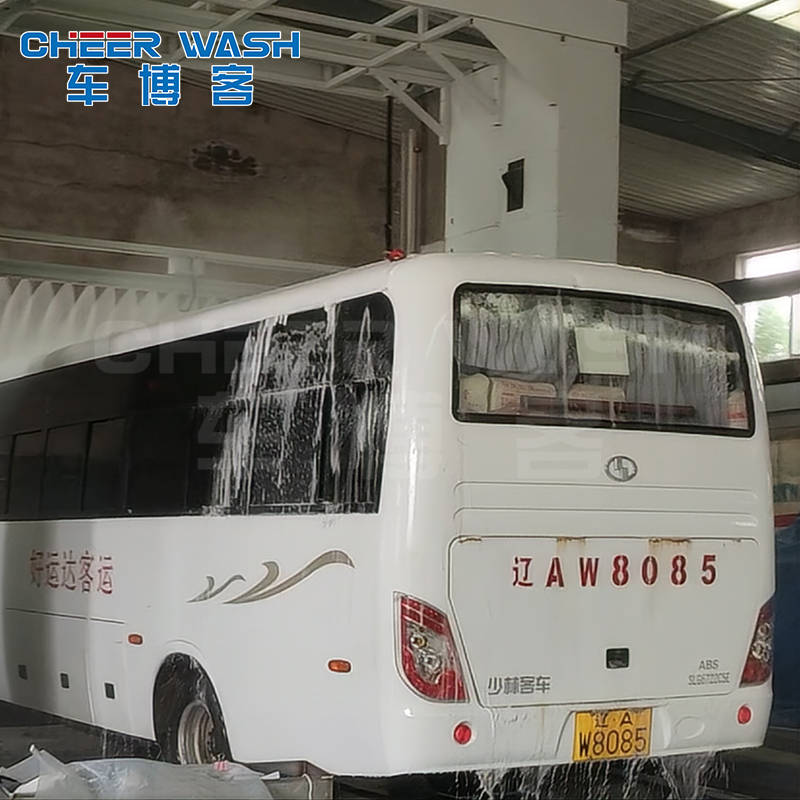
Aligning specific data tracking methods with the operational realities of different wash systems ensures reliable performance. The physical mechanics of the wash process dictate the most effective way to capture and utilize vehicle data.
High-pressure, chemical-reliant systems are primarily used for irregularly shaped vehicles such as tankers, garbage trucks, and septic trucks. A touchless commercial vehicle wash relies heavily on precise chemical application rather than friction. Tracking data in these environments focuses heavily on chemical dwell times, titration rates, and volume usage.
Because these vehicles often carry heavy, irregular soil loads, optical identification can be challenging. RFID is typically the preferred method here. The data logged must verify that heavy-duty cleaning protocols were followed, tracking the exact ounces of low-pH and high-pH detergents applied and the duration of the high-pressure rinse. This ensures optimal cost per wash while maintaining the aggressive cleaning power required for these specific vehicle types.
High-throughput systems are designed for standardized fleets like delivery vans, utility trucks, and rental cars. A tunnel car wash machine prioritizes speed and volume. Vehicles move continuously through various cleaning stages on a conveyor or drive-through format.
Data tracking in tunnel setups must maintain rapid processing speeds. ALPR or long-range RFID are essential to log vehicle entry and exit times without bottlenecking the queue. The system identifies the vehicle, assigns the correct wash profile, and logs the data in real-time as the vehicle progresses past various photo-eyes and conveyor pulse switches. Tracking throughput efficiency and conveyor speeds ensures the facility maximizes its hourly processing capacity.
Friction-based systems utilize sensors to map the vehicle's shape, adjusting brush positions dynamically. Transit buses, box trucks, and standard trailers benefit greatly from a contour following car wash machine. The primary data focus here involves recording specific wash profiles and mechanical settings.
When the system identifies a specific bus or truck via RFID, it retrieves the saved contour profile. The PLC logs the brush pressure settings, the exact path taken by the gantry, and the amperage draw of the brush motors. Tying these mechanical metrics to the vehicle ID ensures consistent wash quality on subsequent visits and prevents equipment damage by recalling the exact dimensions and safe washing zones for that specific unit.
Comparing automated in-house bays against outsourced mobile trailer-mounted pressure washers highlights a significant gap in data reliability. Fixed automated systems provide verifiable, system-generated data logs directly from the machine's PLC. Every metric is objective, time-stamped, and immune to human error.
Feature |
Fixed Automated Bay |
Mobile Wash Crew |
|---|---|---|
Data Capture Method |
Automated PLC logging via RFID/ALPR |
Manual paper logs or mobile app entry |
Utility Tracking |
Exact flow meter data per vehicle |
Estimated tank depletion rates |
Compliance Proof |
System-generated timestamps and metrics |
Subjective before-and-after photos |
Error Rate |
Near zero (machine verified) |
High (dependent on human memory) |
Mobile crews often rely on manual documentation and visual inspections to prove service delivery. While mobile washing offers geographical flexibility, it lacks the granular, automated data capture of a fixed bay. Transitioning to a fixed automated system replaces subjective paperwork with hard data, providing fleet managers with absolute certainty regarding utility consumption, wash frequency, and environmental compliance.
Capturing the right data points transforms raw numbers into actionable fleet intelligence. A comprehensive tracking system should log a specific set of metrics for every single wash cycle.
Metric |
Data Source |
Business Application |
|---|---|---|
Timestamp and Duration |
PLC Internal Clock |
Measures throughput efficiency and identifies operational bottlenecks. |
Vehicle ID and Classification |
ALPR / RFID / Kiosk |
Assigns costs to specific units and verifies compliance schedules. |
Consumables Used |
Flow Meters / Dosing Pumps |
Tracks gallons of water and ounces of detergent for resource optimization. |
Equipment Performance |
System Sensors / VFDs |
Logs pressure drops or fault codes to trigger preventative maintenance. |
Operator/Driver ID |
PIN Pad / RFID Badge |
Ensures accountability for wash authorization and package selection. |
Wash Package Selected |
PLC Program Logic |
Confirms the correct cleaning protocol was applied to the vehicle type. |
Exact entry, exit, and total bay time provide a clear picture of facility throughput. By analyzing duration data, operators identify if drivers are lingering in the bay or if the machine is operating slower than specified. Vehicle classification data ensures that a Class 8 tractor receives a different chemical dosage and wash profile than a standard step van, optimizing resources automatically.
Logging the wash machine's operational health during the cycle is just as important as tracking the vehicle. Recording pressure drops, chemical empty alerts, or motor fault codes alongside the vehicle data creates a comprehensive operational history. If a specific vehicle consistently triggers a contour sensor fault, maintenance teams investigate the anomaly immediately. This proactive approach prevents minor issues from escalating into major downtime events.
To ensure these metrics remain accurate, facility managers should implement a routine audit process:
Verify flow meter calibration monthly to ensure chemical draw matches PLC reports.
Cross-reference PLC timestamps with gate entry logs to identify any unauthorized bay access.
Monitor Variable Frequency Drive (VFD) fault codes for brush motors to detect premature wear.
Track reclaim water ratios against fresh water makeup to ensure environmental compliance.
Implementing automated data tracking requires evaluating the conceptual trade-offs between hardware investments and long-term operational savings. The value of these systems extends far beyond simple record-keeping; they fundamentally alter how wash bay resources are managed.
Contrast the upfront capital expenditure of installing RFID readers or ALPR cameras against the annual labor savings. Eliminating manual clipboard tracking and administrative data entry frees up significant labor hours. Staff no longer need to manually reconcile handwritten logs with fleet databases. The automated system handles the data transfer silently in the background, allowing personnel to focus on higher-value maintenance tasks.
Automated, verifiable wash logs eliminate billing disputes with commercial clients. Providing undeniable digital proof of service replaces the need for manual before-and-after photos, which are often subjective and easily lost. When an invoice is backed by system-generated timestamps, chemical usage data, and vehicle ID verification, disputes disappear. This accuracy accelerates payment cycles and strengthens client relationships based on transparency.
Evaluate the scalability of the chosen technology. Scaling RFID tags across a growing fleet requires outfitting each new vehicle with a physical transponder. Conversely, an ALPR system requires no in-vehicle hardware, making it highly scalable for fleets with high vehicle turnover or those utilizing rental units. Understanding these dynamics ensures the chosen data tracking method aligns with your fleet's growth trajectory.
Deploying sensitive electronic hardware in a wash bay environment presents unique challenges. Heavy water spray, harsh chemicals, and extreme temperature fluctuations compromise standard network equipment. Recognizing these real-world friction points allows for proactive mitigation.
Environmental interference poses a significant risk to RFID reliability. Metal structures and electrical noise from large motors disrupt radio frequency signals, causing ghost reads or missed tags. Mitigation requires precise antenna placement, ensuring the read zone is isolated from interference. Furthermore, all network hardware, readers, and enclosures must carry strict IP68 or NEMA 4X ratings to withstand continuous moisture and chemical exposure.
Optical failures remain a reality for ALPR systems. When license plates are obscured by heavy mud, snow, or physical damage, the cameras cannot extract the characters. Implementing a secondary PIN-pad entry system or an RFID badge reader serves as a necessary fallback. This redundancy ensures that a dirty license plate does not prevent a vehicle from receiving its scheduled wash.
Network reliability is critical for cloud-dependent systems. If the internet connection drops during a wash cycle, data can be lost. Specifying wash controllers with robust local data caching capabilities mitigates this risk. The PLC must be able to store thousands of wash records locally on an SD card during an outage and automatically sync that data to the cloud once connectivity is restored, ensuring zero data loss.
Audit your wash bay's current network infrastructure to confirm it supports edge caching and API data transfers.
Request API documentation from your fleet management software provider to map out data payload requirements.
Inspect your existing wash machine PLCs with a qualified technician to determine if they can accept direct RFID or ALPR module inputs.
Install flow meters on your main water and chemical lines to establish baseline consumption metrics before integrating automated software.
A: Systems identify vehicles using Automated License Plate Recognition (ALPR) cameras, RFID transponders mounted on the vehicle, or driver-entry terminals where a PIN or barcode is scanned. These methods instantly cross-reference the vehicle with an authorized database before initiating the wash cycle.
A: Yes. Modern wash controllers use RESTful APIs to push data directly to fleet management platforms. This allows managers to view wash timestamps, durations, and utility consumption alongside telematics, fuel usage, and maintenance schedules in a single dashboard.
A: ALPR uses optical cameras to read license plates, requiring no hardware on the vehicle but demanding a clear line of sight. RFID uses radio frequency tags mounted on the vehicle, which are highly reliable even when covered in mud or snow, but require physical installation on every fleet unit.
A: The wash machine's programmable logic controller (PLC) monitors flow meters and chemical dosing pumps during the cycle. Because the cycle is tied to a specific vehicle ID via RFID or ALPR, the PLC logs the exact volume of consumables used and assigns it to that specific unit.
A: Robust wash controllers feature local data caching. If network connectivity drops, the PLC stores the wash records internally on an SD card or local memory. Once the internet connection is restored, the system automatically pushes the cached data to the cloud, ensuring no records are lost.
A: DOT regulations require vehicles to maintain visibility of reflective tape, license plates, and lighting. Automated tracking provides undeniable, system-generated digital logs proving exactly when and how often a vehicle was washed, satisfying compliance audits without relying on subjective paper records.


