Achieving consistent, high-quality cleaning on complex vehicle profiles and intricate wheel designs remains a persistent operational challenge without manual prep. Standard static friction setups and purely touch-free systems frequently leave a noticeable stripe of dirt on contoured panels. They also fail to remove baked-on brake dust from rims. This directly leads to customer churn, negative reviews, and reduced top-tier wash conversions. Operators need a reliable way to clean modern vehicles thoroughly.
Consumer and professional detailer skepticism regarding brush safety complicates this issue. Many fear clear-coat scratching from friction systems. Conversely, touch-free chemical washes often lack the mechanical action needed to strip baked-on road film. Balancing safety and cleaning power is critical for modern wash operations.
Integrating specialized wheel brush modules within advanced contour-mapping architectures offers a definitive engineering solution. This approach bridges the gap between high-throughput automation and detailing-grade results. By utilizing a Contour-Following Car Wash Machine With Wheel Brushes, operators can deliver exceptional cleaning performance safely and efficiently.
- Precision Profiling Reduces Missed Spots: Contour-following technology utilizes advanced sensors to map individual vehicle shapes in real-time, ensuring optimal brush-to-surface pressure and eliminating dead zones.
- Targeted Wheel Agitation Drives Retention: Dedicated wheel brush modules address the #1 customer complaint—dirty rims—by applying localized, safe friction that touch-free chemical applications cannot match.
- Calculated ROI vs. Maintenance Trade-offs: While initial capital expenditure and brush maintenance schedules increase, the resulting uplift in premium wash ticket sales and customer loyalty typically offsets operational costs.
- Aesthetic Tunnel Appeal: Modernizing tunnel bays with vibrant, clean brush configurations (such as high-contrast color schemes) serves as an instant visual marketing tool that attracts drive-by traffic and justifies premium tier pricing.
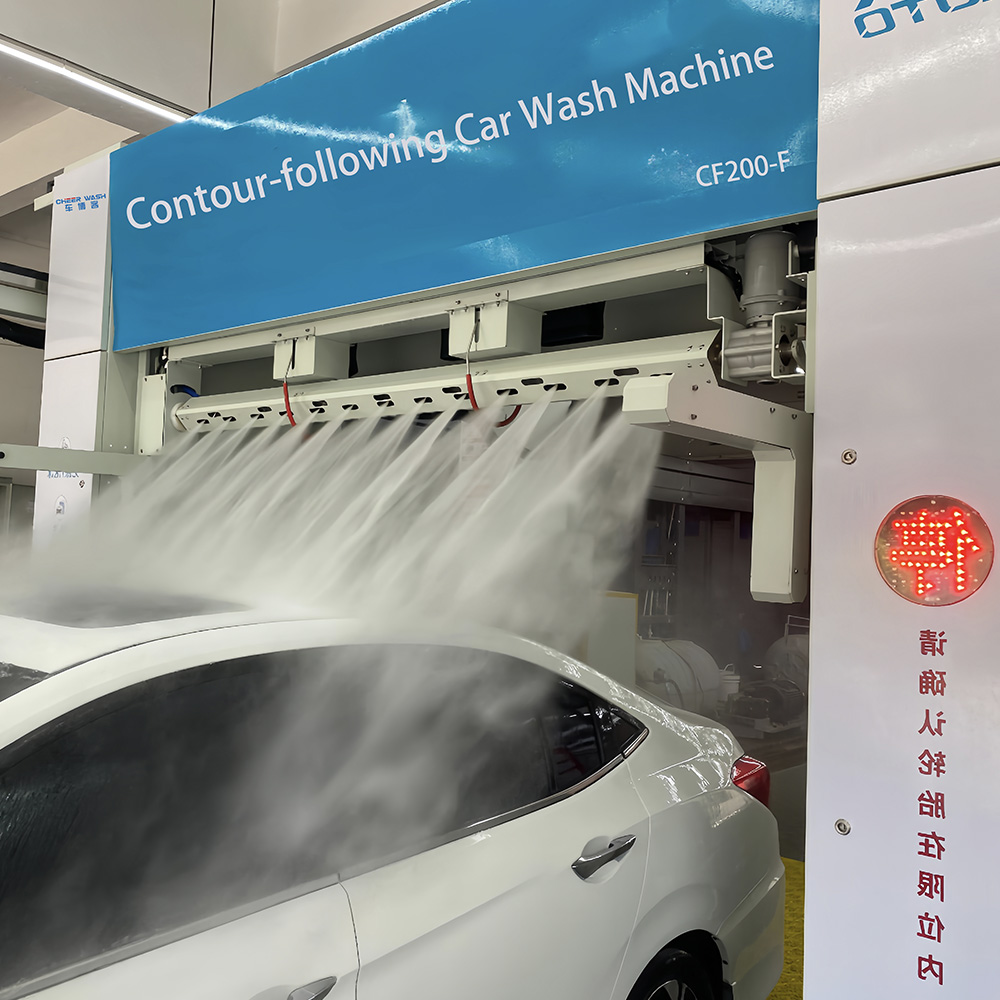
- Hardware Standardization: Systems like the CF200-F car wash machine demonstrate how synchronizing contour mapping with independent wheel cleaning mechanisms provides a scalable, high-volume solution for modern wash bays.
The Engineering Gap: Why Legacy Systems Fail at Complex Contours and Wheels
Limitations of Static Friction and Touch-Free Systems
Rigid brush systems struggle significantly with modern aerodynamic vehicle designs. Sloped windshields, aggressive rear spoilers, and deep side scallops create irregular surfaces. Static brushes operate on fixed axes. They cannot adjust to these varying depths. This results in heavy pressure on protruding parts and zero contact on recessed areas. Dirt remains untouched in these dead zones. When a vehicle with a sharp body line enters a static bay, the brushes simply bridge the gap, leaving a distinct line of road film right down the side of the doors.
Touch-free systems face chemical and dwell-time limitations. They rely entirely on pH shock and high-pressure water. When combating heavy particulate matter, baked-on road film, and brake dust on vehicles neglected for 30 days or more, chemicals alone fall short. The dwell time in a standard automated bay is too brief to break down severe contamination without mechanical agitation. High-pressure water can only shear off loose dirt; it cannot break the static bond of traffic film or the metallic adhesion of hot brake dust on alloy wheels.
The Detailer vs. Automatic Wash Debate
Enthusiasts and professional detailers frequently critique high-friction washes. They point to swirl marks and micro-scratching as inevitable outcomes of automated systems. This skepticism stems from historical experiences with outdated equipment. Legacy polyethylene bristles were stiff and porous. They trapped grit and aggressively scoured clear coats. Older machines also lacked the sophisticated pressure sensors available today, meaning they essentially beat the dirt off the car.
Modern systems use closed-cell foam and advanced polymer materials. These materials repel water and dirt. They do not hold abrasive particles. When paired with proper lubrication, modern friction washing is exceptionally safe. The transition to these materials has largely mitigated the risk of surface damage. The foam acts like a squeegee, gliding over the lubricated surface rather than scratching it.
The Cost of Incomplete Wheel Cleaning
Incomplete wheel cleaning carries a high business cost. Manual pre-washing or post-wash touch-ups require dedicated labor. Paying staff to scrub wheels manually destroys throughput efficiency and inflates payroll. If wheels are left dirty, customers notice immediately. A customer might not notice a missed spot on the roof, but they will always check their rims before driving off the lot.
Customer satisfaction metrics tie heavily to wheel and tire cleanliness. A shiny car body paired with dull, brake-dust-covered rims creates a poor overall impression. Operators lose premium package sales when the highest tier fails to deliver spotless wheels. Effective automated wheel cleaning is essential for retention. If the top package doesn't clean the wheels better than the base package, customers will downgrade on their next visit.
![Contour-Following Car Wash Machine With Wheel Brushes]()
Mechanics of a Contour-Following Car Wash Machine With Wheel Brushes
Precision Profiling: How a Contour Following Wash System Maps Vehicles
A modern contour following wash system relies on sophisticated sensor arrays. Ultrasonic, photoelectric, or 3D profiling sensors scan the vehicle upon entry. They create a dynamic, real-time silhouette of the car. This data captures the exact dimensions, angles, and protrusions of the specific vehicle in the bay. The sensors map everything from the slope of the hood to the presence of a roof rack or rear spare tire.
The system's Programmable Logic Controller (PLC) processes this sensor data instantly. It translates the silhouette into variable pneumatic or electric brush positioning commands. The PLC adjusts the arms to maintain constant, gentle contact across the entire vehicle surface. This ensures optimal cleaning pressure without excessive force. If the sensors detect a steep drop-off, like the back of a pickup truck cab, the PLC retracts the top brush immediately to prevent it from crashing into the bed.
Wheel Brush Module Integration and Synchronization
Deploying a wheel cleaning machine component requires precise mechanical engineering. Telescoping arms extend to meet the wheel face. Rotational speed controls adjust based on the wheel type. High-pressure chemical delivery systems apply targeted cleaners directly through the brush manifold. The mechanical action must be robust enough to handle heavy dirt but precise enough to avoid hitting the fenders.
The system isolates wheel tracking from top and side brush movements. This independent operation prevents vehicle damage. It ensures the wheel brushes have adequate dwell time to scrub the rims while the rest of the machine cleans the body. Synchronization maximizes efficiency without compromising safety. The wheel brushes track alongside the vehicle, maintaining contact with the rims even as the car moves forward on the conveyor.
Anatomy of Modern Wheel and Tire Brushes
Brush design varies based on the target surface. Tire sidewalls require stiff, heavy-duty bristles to remove blooming and road grime. Delicate alloy rims need soft, flagged-tip polymer filaments or closed-cell foam. Using the right material prevents scratching sensitive wheel finishes. The core of the brush is usually made of high-density plastic or stainless steel to withstand the constant rotational torque.
Effective wheel cleaning requires multiple rotational axes. Brushes must clean the flat face of the rim and reach into the inner barrel recesses. Advanced modules articulate to follow the wheel's rotation, ensuring comprehensive coverage across complex spoke designs. Some systems use a dual-action approach, where one brush spins clockwise and another counter-clockwise to hit all angles of the spokes.
Evaluating Performance: Features-to-Outcomes Mapping
Surface Safety vs. Agitation: Balancing Friction
Balancing friction and safety is paramount. Modern contour systems utilize closed-cell foam and advanced polymers. These materials provide sufficient agitation to remove road film without scouring the clear coat. Contour-following technology prevents excessive pressure by dynamically adjusting to the vehicle's shape. The pneumatic cylinders act as shock absorbers, allowing the brushes to float over the contours.
Continuous lubrication is vital for surface safety. Water and cleaning solutions flush continuously through the brush spindle. This keeps the contact surfaces clean and free of abrasive grit. The constant flow ensures dirt is washed away immediately, preventing it from grinding into the paint. Without proper lubrication, even the softest foam can cause friction burns on the clear coat.
Deep Cleaning Alloys and Rims
A dedicated wheel brush car wash setup outperforms high-pressure blasters alone. Blasters cannot break the static bond of baked-on brake dust. Physical agitation from specialized brushes lifts this stubborn contamination effectively. The bristles reach into the lug nut holes and around the valve stems where high pressure often misses.
Synchronized chemical application enhances this process. Wheel acids or non-acid cleaners are applied directly through the brush manifold. This localized application ensures the chemical works exactly where the friction occurs. It maximizes cleaning power while minimizing chemical waste. The chemical breaks down the metallic particles, and the brush sweeps them away.
| System Type | Wheel Cleaning Method | Brake Dust Removal | Surface Safety |
| Legacy Static Friction | Fixed side brushes | Poor | Moderate (Risk of high pressure) |
| Touch-Free Only | High-pressure chemical application | Moderate (Fails on baked-on dust) | High |
| Contour-Following with Wheel Brushes | Targeted, articulating wheel modules | Excellent | High (Regulated pressure) |
Throughput and Cycle Times
Parallel processing significantly impacts vehicles-per-hour (VPH) metrics. Washing the vehicle body while simultaneously scrubbing the wheels reduces overall cycle time. Operators do not have to pause the conveyor or the gantry for a separate wheel cleaning stage. This simultaneous action maintains high throughput during peak hours. In a busy tunnel, saving even 15 seconds per car translates to dozens of extra washes per day.
Operational Maintenance and Resource Efficiency
Maintenance Realities of Advanced Brush Systems
Advanced brush systems require diligent maintenance. Moving parts experience wear and tear. Pneumatic cylinders and bearings within the wheel brush modules bear significant stress. Operators must monitor these components closely to prevent unexpected downtime. A blown pneumatic line can shut down the entire wheel cleaning module instantly.
Implementing strict maintenance protocols is necessary. Daily checks should look for bristle matting and tangled debris. Weekly inspections must verify hydraulic and pneumatic line pressures. Monthly routines should include deep cleaning the brushes themselves. This prevents grease buildup and stops contaminant transfer back onto customer wheels. Bearings need regular greasing to handle the wet, chemical-heavy environment.
- Inspect all pneumatic lines for leaks or abrasions daily.
- Check brush rotation speed and torque settings weekly.
- Clean sensor lenses with a microfiber cloth to ensure accurate profiling.
- Grease all pivot points and bearings according to the manufacturer's schedule.
- Replace brush segments that show more than 20% wear to maintain cleaning efficacy.
Water and Chemical Consumption Efficiency
Contour-following systems optimize resource usage. They apply chemical solutions only where the vehicle surface is mapped. This precision reduces overspray and waste. Water is directed exactly where needed, improving the overall efficiency of the wash cycle. By keeping the nozzles close to the vehicle surface, less chemical is lost to wind drift inside the tunnel.
Visual Merchandising ROI
Visual appeal plays a strong role in customer perception. Replacing worn, faded brushes with bright, brand-coordinated colors signals equipment modernization. It communicates premium quality to customers. A clean, vibrant wash bay justifies higher ticket prices and attracts drive-by traffic. Customers equate clean equipment with a clean car.
Spotlight on Industry Standards: The CF200-F Car Wash Machine Architecture
Technical Specifications and Sensor Accuracy
The CF200-F car wash machine exemplifies modern engineering standards. It features a highly reliable sensor array that maps vehicles with pinpoint accuracy. The brush articulation speed is calibrated to respond instantly to the PLC's commands. This ensures smooth, continuous contact. The sensors are designed to operate in high-humidity environments without fogging or giving false readings.
The CF200-F coordinates its wheel cleaning module perfectly with the overhead contouring gantry. This coordination maintains zero-collision safety envelopes. The machine cleans aggressively where needed while protecting delicate vehicle accessories. The software algorithms predict the vehicle's movement, allowing the brushes to anticipate changes in the contour rather than just reacting to them.
Scalability for High-Volume Operations
Integrating this tier of machinery into existing In-Bay Automatics (IBA) or short express tunnels is highly feasible. The footprint requirements are designed to maximize existing spatial constraints. Utility demands are optimized for standard commercial wash setups. This makes upgrading a practical choice for high-volume operations. The modular design allows operators to add or remove components based on their specific bay dimensions.
Implementation Risks and Mitigation Strategies
Managing Brush Wear and Calibration
Improperly calibrated sensors pose a significant risk. They can cause aggressive brush contact, missed wheel tracking, or wheel finish damage. If the system misreads the vehicle profile, it may apply too much pressure. A sensor that reads a vehicle as narrower than it actually is will force the side brushes to crush against the doors.
Mitigation requires strict daily and weekly sensor cleaning protocols. Routine alignment and tension checks are mandatory. Operators must perform monthly PLC calibration checks to ensure the system interprets sensor data correctly. Proactive maintenance prevents costly damage. Keeping a log of sensor calibrations helps track drift over time.
Chemical Compatibility and Material Degradation
Using overly aggressive wheel chemicals introduces risks. Highly acidic or alkaline solutions degrade brush fibers prematurely. They can also corrode metal core components within the brush modules. Acidic cleaners can eat through the stainless steel shafts if left to sit overnight.
To mitigate this, operators must align chemical pH levels with the manufacturer's brush material specifications. Implementing automatic fresh-water rinse cycles after every wash flushes residual chemicals from the brushes. This extends the lifespan of the equipment significantly. Running a purge cycle at the end of the day ensures no harsh chemicals sit in the lines or on the brushes.
Conclusion
Upgrading to a contour-following system with integrated wheel brushes is a necessary evolution. Operators facing high local competition must meet demanding consumer expectations regarding wheel cleanliness. This technology provides the mechanical action required to deliver detailing-grade results automatically.
Operators should evaluate their current manual labor costs for wheel prep. Comparing these costs against premium wash package conversion rates helps justify the upgrade. Eliminating manual prep while increasing top-tier sales transforms bay profitability.
- Conduct a thorough site survey to confirm bay dimensions and utility capacities.
- Review local water reclamation compliance requirements for high-friction systems.
- Request a detailed maintenance layout analysis from equipment manufacturers.
- Establish a daily sensor and brush inspection checklist for your staff.
FAQ
Q: How does a contour-following car wash system prevent vehicle damage?
A: It uses real-time sensor mapping to create a dynamic vehicle profile. The system maintains a consistent, safe distance and pressure, adjusting instantly to the vehicle's unique shape to avoid excessive force.
Q: Are wheel brush modules safe for aftermarket, custom alloy, or painted wheels?
A: Yes. Modern wheel brushes use flagged bristles or soft foam combined with highly lubricated chemical delivery. Rotational torque sensors ensure they clean effectively without scratching clear-coated or painted alloys.
Q: How do you recognize signs of tire brush wear, and how often do they need replacement?
A: Look for frayed tips, collapsed bristles, or uneven wear patterns. Replacements are typically needed between 30,000 to 50,000 washes, depending on chemical harshness and operational volume.
Q: Can a CF200-F car wash machine fit into a standard wash bay?
A: Yes. Advanced contour systems are engineered to maximize existing spatial constraints. They typically fit within standard footprint requirements for In-Bay Automatics or short express tunnels.
Q: Does adding a wheel brush car wash module slow down the overall wash cycle?
A: No. Wheel brushes operate simultaneously with the top and side contour brushes. This parallel processing means the impact on total cycle time is negligible while drastically improving wash quality.
Q: How do you keep car wash wheel brushes from getting dirty and transferring grease to other cars?
A: Implement daily spray-down procedures and utilize specialized self-cleaning wash cycles. Weekly deep cleaning with degreasers ensures no cross-contamination occurs between vehicles.