Commercial utility rates are climbing, and profit margins for car wash operators are shrinking under the weight of heavy operational overhead. If you run a high-volume wash facility, electricity and water represent your highest variable costs. Traditional fixed-speed car wash systems compound this problem by running high-pressure pumps and blowers at 100% capacity regardless of the specific wash cycle requirement. This binary approach leads to excessive electrical waste and triggers severe peak demand penalties from utility providers. Modern touchless systems are shifting toward frequency conversion technology, utilizing Variable Frequency Drives (VFDs) to solve this operational inefficiency. This technical evaluation examines how a Frequency Conversion Contactless Car Wash Machine fundamentally alters energy consumption, mitigates equipment wear, and impacts long-term operating expenses by dynamically adjusting motor speeds to match exact wash stage demands.
- Dynamic Power Allocation: Frequency conversion technology matches motor speed to exact wash stage demands, eliminating the energy waste inherent in fixed-speed, always-on systems.
- Peak Demand Mitigation: Soft-starting capabilities reduce inrush current, preventing utility demand spikes and lowering overall commercial electricity tariffs.
- Mechanical Longevity: By combining a touchless design (which has fewer physical contact components to wear out) with variable frequency systems, operators drastically reduce mechanical stress and extend the lifecycle of high-pressure pumps and blowers.
- Measurable ROI: While initial CAPEX is higher, the convergence of water conservation and automatic wash energy efficiency typically yields a verifiable payback period through reduced monthly overhead.
The Mechanics of Energy Waste in Traditional Wash Systems
To evaluate the financial impact of a wash system upgrade, you must first define the baseline metrics for car wash energy consumption. The primary success criteria are reducing kilowatt-hours (kWh) per vehicle and minimizing peak kilowatt (kW) demand without compromising wash quality. Traditional systems struggle to meet these criteria because of their underlying mechanical design. Operators need to measure the exact power draw during each phase of the wash to understand where the waste occurs.
The Inefficiency of Fixed-Speed Motors
Traditional contact and touchless systems operate on a binary, on/off basis. When a wash cycle begins, the motors engage at full speed and remain there until the cycle ends. Running a 25HP motor at full RPM during low-demand stages, such as pre-soak application or spot-free rinsing, wastes massive amounts of kinetic energy. The system consumes maximum power even when the task requires minimal pressure. This means you are paying for high-pressure output while only delivering a low-pressure chemical spray.
The Cost of Inrush Current
Starting large induction motors across-the-line creates severe electrical realities. When a traditional fixed-speed motor starts, it draws an initial power surge that can reach up to six times its full load amps. Utility providers monitor these surges and apply costly peak demand charges based on the highest power draw recorded during a billing cycle. These inrush currents artificially inflate monthly commercial electricity tariffs, severely impacting site profitability. A single motor start during peak hours can dictate your utility bill for the entire month.
![Frequency Conversion Contactless Car Wash Machine]()
How a Frequency Conversion Contactless Car Wash Machine Actually Saves Energy
Understanding how a variable frequency car wash machine reduces operating costs requires looking at the core technology driving the energy reduction. The integration of smart drives changes the electrical landscape of the equipment room.
Variable Frequency Drives (VFDs) Explained
A variable frequency drive modifies the electrical supply frequency (Hz) and voltage to precisely control AC motor speed and torque. Instead of slamming a motor into full operation, the VFD ramps up the power smoothly. This controlled acceleration eliminates the massive inrush current that triggers peak demand penalties. The drive acts as a buffer between the utility grid and your heavy equipment, ensuring that power is drawn only as needed.
Matching Motor Speed to Wash Stage Demand
Energy efficiency relies on stage-by-stage power management. A frequency conversion system contrasts the high RPM needed for the final high-pressure rinse with the lower RPM sufficient for applying detergents. When the system applies a chemical pre-soak, the VFD slows the pump motor down, consuming only a fraction of the power required for the heavy rinse cycle. This dynamic adjustment happens in milliseconds, completely transparent to the customer in the bay.
The Affinity Laws of Centrifugal Loads
The engineering principle governing pumps and blowers is known as the Affinity Laws. These laws state that power consumption drops at the cube of the speed reduction. If a VFD reduces motor speed by just 20%, the energy usage drops by nearly 50%. This non-linear relationship is why frequency conversion yields such dramatic reductions in total kWh consumed per vehicle. You do not need to cut motor speed in half to see massive electrical savings.
Throughput and Cycle Time Optimization
Variable frequency drives allow for rapid, controlled acceleration and deceleration of motors between wash phases. This precision reduces idle waiting periods, known as dwell time. By accelerating the total cycle time per vehicle, operators increase hourly site throughput without requiring extra utility load. Faster transitions mean more cars washed per hour and higher daily revenue. The equipment spends less time spooling up and more time actively washing.
Evaluating the Financial Impact: OPEX and ROI Dimensions
Connecting the technical features of frequency conversion to verifiable financial outcomes is critical for equipment evaluation. You must look beyond the sticker price and analyze the monthly operating expenses.
Direct Electrical Savings
Calculating the drop in baseline electricity usage per wash reveals the direct financial benefit of VFD integration. Industry-standard VFD implementation data shows that operators can reduce pump and blower electrical loads by 30% to 50%. By multiplying your current cost per kWh by this reduction percentage, you can project your monthly electrical savings. Over a high-volume weekend, these savings compound rapidly.
| Wash Stage | Fixed-Speed Power Draw | VFD Power Draw | Energy Reduction |
| Pre-Soak Application | 100% | 40% | 60% |
| High-Pressure Rinse | 100% | 100% | 0% |
| Spot-Free Rinse | 100% | 50% | 50% |
| Drying Cycle (Blowers) | 100% | 70% (Ramped) | 30% |
Synergies in an Energy Saving Car Wash
Water consumption baselines also improve with frequency conversion. Standard automatic wash systems already use up to 60% less water than manual hand washes. An energy saving car wash optimizes this further. Variable frequency control over high-pressure pumps prevents high-pressure water bypass waste. The system matches water volume strictly to the active wash phase, ensuring zero water is wasted during low-demand cycles.
Maintenance and Lifecycle Cost Reduction
Touchless systems naturally have fewer physical moving parts in contact with vehicles than brush systems, minimizing structural wear. Combining this touchless architecture with the electrical soft-start capabilities of VFDs eliminates mechanical shocks, belt slippage, and bearing wear associated with instant-on motors. This reduction in mechanical stress leads to significantly lower maintenance cycles and extends the lifespan of expensive pump and blower components.
Technical Specifications and Equipment Evaluation: The CL600 Car Wash Machine
Using a specific, industry-relevant model helps anchor the technical evaluation of frequency conversion systems. The hardware configuration dictates the actual performance in the bay.
System Architecture of the CL600
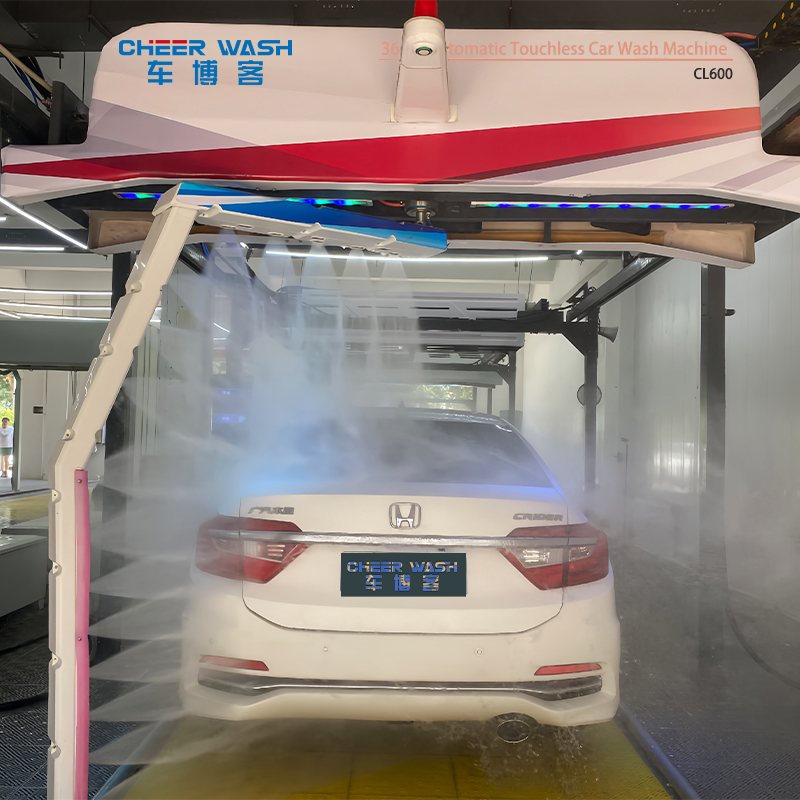
The CL600 car wash machine utilizes advanced pump and motor configurations. Its frequency conversion integration manages high-pressure delivery by constantly adjusting motor speeds based on the active wash stage. This architecture ensures maximum impact pressure only when required, conserving energy during chemical applications and spot-free rinses. The main pump station is designed specifically to handle variable loads without overheating.
Sensor Integration and Smart Control Systems
The machine's Programmable Logic Controller (PLC) communicates with ultrasonic or photoelectric sensors to map vehicle dimensions. This smart control system adjusts the variable frequency drives in real-time to optimize nozzle distance and pump pressure for each specific vehicle profile. Smaller vehicles receive a tailored wash profile that uses less water and power than a full-sized truck.
Driver Guidance and Platform Synchronization
The control loop handles driver placement and common bay errors effectively. If a driver fails to shift to neutral or brakes prematurely on the platform, the smart PLC and VFD integration instantly idles down pump motors to low-frequency states. This prevents run-dry damage and eliminates power waste during positioning delays. The system waits patiently in a low-power state until the vehicle is correctly aligned.
Real-World Performance Benchmarks
When evaluating equipment, operators must look at realistic operational data. A frequency conversion system can process high vehicle volumes while maintaining a lower energy footprint per car. By comparing vehicles washed per hour against total energy consumed, buyers gain a tangible evaluation lens for assessing operational efficiency. Field data consistently shows higher throughput with lower utility spikes.
Implementation Realities and Adoption Risks
Upgrading to frequency conversion technology involves specific challenges and conceptual trade-offs that operators must consider before signing a purchase order.
CAPEX vs. Long-Term OPEX
The initial purchase price of frequency conversion equipment is higher than standard contact systems. Operators must calculate the break-even point based on local utility rates and wash volume. High-volume sites in areas with expensive peak-demand electrical tariffs will see a much faster return on investment. You are trading upfront capital for long-term operational stability.
Retrofitting vs. New Installations
Retrofitting VFDs onto existing fixed-speed touchless systems involves technical complexities. It requires inverter-duty motors and extensive PLC reprogramming. Investing in a natively integrated frequency conversion machine often provides better reliability and seamless component communication compared to a piecemeal retrofit. Slapping a VFD on an old motor will likely cause premature motor failure due to insulation breakdown.
Environmental and Maintenance Requirements
VFDs require clean, climate-controlled environments. They must be housed in NEMA-rated enclosures to prevent overheating and dust ingress. Operators must also ensure they have access to specialized technician training for troubleshooting VFD faults and maintaining the electrical environment. You cannot install these drives in a damp, chemical-filled mechanical room without proper protection.
Conclusion
- Conduct a localized utility rate audit to identify your specific peak demand charges and time-of-use tariffs.
- Calculate your current electrical and water cost-per-wash baseline using your last six months of utility bills and wash counts.
- Request detailed VFD performance curves and electrical load specifications from equipment manufacturers.
- Inspect your mechanical room to ensure you have the necessary climate control and space for NEMA-rated VFD enclosures.
- Evaluate the feasibility of retrofitting your existing inverter-duty motors versus installing a natively integrated system.
FAQ
Q: How much energy does a variable frequency car wash machine actually save?
A: Based on the Affinity Laws governing centrifugal loads, frequency conversion systems typically reduce pump and blower electrical consumption by 30% to 50%, depending on the specific wash cycle programming and local utility rates.
Q: Does frequency conversion reduce the water pressure of a touchless wash?
A: No. The pressure is optimized, not compromised. The system delivers maximum high pressure only when the specific wash stage dictates it, and reduces pressure during stages like chemical application where high impact is unnecessary.
Q: What is the typical ROI period for an energy saving car wash system?
A: The return on investment depends heavily on local utility rates, peak demand penalties, and daily wash volume. Typically, high-volume operators see a payback period ranging from 18 to 36 months.
Q: Can VFDs be added to my existing automatic car wash?
A: Retrofitting is possible but complex. It requires existing motors to be inverter-duty rated to handle the VFD frequencies, and the system's PLC will require significant reprogramming to manage the variable speeds correctly.
Q: How does the CL600 car wash machine utilize frequency conversion?
A: The CL600 uses smart sensors to profile the vehicle and communicates with the VFDs to dynamically adjust high-pressure water delivery and motor speeds based on the exact requirements of each wash phase.
Q: Do frequency conversion systems require specialized maintenance?
A: Yes. While they reduce mechanical wear on pumps and motors, the VFDs themselves require clean electrical environments, regular cooling fan checks, and periodic software diagnostics to ensure optimal performance.
Q: Does the variable motor speed of a frequency conversion system slow down the wash process for the customer?
A: No, it actually improves throughput. VFDs allow for faster, highly controlled acceleration and deceleration between wash cycles, decreasing vehicle dwell times and getting drivers through the bay faster.