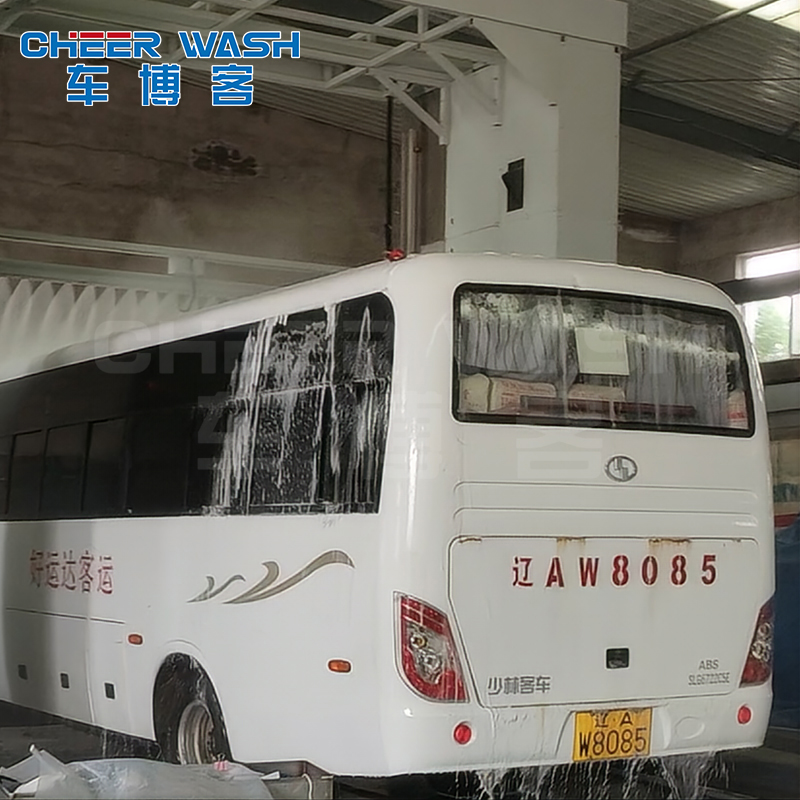
Manual fleet washing and outdated friction systems create compounding hidden costs for commercial operations. Relying on manual labor introduces unpredictable wash times, while traditional brush systems often cause cumulative damage to vehicle paint, mirrors, and specialized attachments. Balancing rapid turnaround times with thorough, non-damaging cleaning remains a primary operational challenge for mixed commercial fleets, including transit buses, tractor-trailers, and heavy-duty vehicles.
Modern 360° touchless systems provide a strategic operational upgrade to solve this challenge. By eliminating physical contact with the vehicle surface, these automated systems protect valuable assets while drastically reducing wash cycle times. Upgrading to a Truck & Bus Touchless Car Wash Machine shifts fleet maintenance from an unpredictable cost center to a standardized, efficiency-driving process. Operators can maintain consistent fleet presentation, improve vehicle utilization rates, and protect delicate exterior components without sacrificing cleaning power.
- Automated 360° touchless systems reduce wash times to 5–10 minutes per vehicle, directly increasing fleet utilization and route availability.
- Advanced contour-scanning technology prevents damage to mirrors, antennas, and specialized vehicle attachments commonly caused by traditional brush-based systems.
- Long-term viability relies heavily on the integration of water reclamation capabilities and precise chemical consumption rates.
- Site preparation, utility upgrades, and bay dimensions are the primary bottlenecks in implementation and require early-stage auditing.
The Operational Shift: Why Fleets are Moving to Touchless Systems
Defining the Success Criteria for Fleet Washing
Wash speed directly correlates to fleet operational hours. Establishing a baseline metric of 5 to 10 minute cycle times minimizes vehicle downtime, keeping transit and delivery assets on the road. Lengthy manual washing protocols keep vehicles out of service, reducing overall fleet efficiency and route availability. When a transit authority operates hundreds of buses, saving 20 minutes per wash translates to thousands of recovered operational hours annually. Fleet managers must track these metrics closely to justify equipment upgrades and optimize labor allocation.
Asset protection stands as a critical operational priority. Eliminating surface damage preserves fleet branding and extends the lifespan of custom vinyl wraps. Touchless systems prevent the micro-scratches and abrasive wear associated with mechanical brushes. Achieving consistent wash quality across diverse vehicle profiles, regardless of the operator, ensures standardization. Automated systems deliver the exact same chemical application and high-pressure rinse for every cycle, removing human error from the maintenance equation.
Standardization also impacts chemical usage and environmental compliance. Manual washing often leads to over-application of detergents, increasing operational expenses and complicating wastewater treatment. Automated systems utilize precise dosing pumps to apply the exact amount of chemical required based on the vehicle profile. This level of control allows facilities to forecast consumable expenses accurately and maintain strict compliance with municipal discharge regulations.
Comparative Operational Profiles: Truck Wash vs. Bus Wash Requirements
Mixed fleets present unique structural challenges. Transit buses feature flat backs and delicate front-facing components, including wide windshields, digital destination signs, and front-mounted bike racks. Tractor-trailers possess irregular, high-clearance gaps, exposed chassis components, and complex fifth-wheel assemblies. A single wash system must adapt to these drastically different physical profiles without requiring manual intervention between cycles.
Cleaning priorities also diverge based on vehicle type. A commercial truck wash machine must target heavy undercarriage road grime, diesel soot, and industrial grease. Conversely, specialized bus wash equipment focuses heavily on side-panel passenger visibility, transit mirror preservation, and delicate exterior decals. Modern automated systems adjust their wash parameters to meet these specific soil conditions and structural layouts.
| Vehicle Type | Primary Soil Types | Critical Wash Zones | Equipment Priority |
| Transit Bus | Road salt, light dust, exhaust soot | Windows, destination signs, flat sides | Mirror avoidance, gentle chemical application |
| Tractor-Trailer | Heavy mud, diesel exhaust, grease | Undercarriage, fifth wheel, rear doors | High-pressure impact, heavy degreasing |
| Delivery Van | Urban road film, brake dust | Side panels, rear cargo doors, wheels | Speed, high throughput, spot-free rinse |
To accommodate these variations, advanced systems utilize programmable logic controllers (PLCs). The PLC stores specific wash recipes tailored to different vehicle classes. When a vehicle enters the bay, the operator selects the corresponding profile, and the machine automatically adjusts its sensor mapping, chemical selection, and water pressure. This adaptability is essential for facilities servicing municipal fleets, logistics companies, and independent owner-operators.
![Commercial Fleet Wash Facility]()
Core Mechanics of a Truck & Bus Touchless Car Wash Machine
360 Rotating Car Wash Technology Explained
Precision sensor mapping forms the foundation of a 360 rotating car wash. Laser-guided contouring, ultrasonic sensors, and smart vehicle detection map complex dimensions in real-time. This data allows the wash apparatus to adjust dynamically to the exact shape and size of the vehicle in the bay. The sensors detect anomalies such as extended mirrors, exhaust stacks, and custom cargo racks, ensuring the wash boom maintains a safe operating distance.
The high-pressure arch mechanics rely on a rotating 360° boom. This boom maintains an optimal distance from the vehicle surface, ensuring targeted chemical application and maximum high-pressure rinsing impact. The robotic arch articulates to provide full envelope coverage. It thoroughly cleans the hardest-to-reach vehicle zones, specifically the front head, sides, and rear vertical surfaces where road film accumulates most heavily.
The drive mechanism for the rotating boom utilizes heavy-duty gearboxes and variable frequency drives (VFDs) to ensure smooth, precise movements. Jerky or inconsistent motion can lead to uneven chemical application and missed spots during the high-pressure rinse. By controlling the acceleration and deceleration of the boom, the system maximizes cleaning efficiency while minimizing mechanical wear on the drive components.
Touchless vs. Friction (Brush) Wash Systems
Cleaning efficacy in touchless systems relies on a two-step chemical process. Low pH and high pH detergents are layered to break down static road grime without mechanical agitation. Friction systems depend on physical abrasion to remove heavy road film, which can degrade clear coats over time. The chemical reaction in a touchless system lifts the dirt from the surface, allowing the high-pressure water to blast it away safely.
Risk assessment strongly favors touchless models for complex fleets. Friction systems introduce the risk of brush entanglement on irregular truck beds, transit bus mirrors, or utility vehicles. Touchless models operate with extensive clearance safety, eliminating the physical contact that leads to asset damage and costly repairs. A single damaged transit mirror can cost hundreds of dollars to replace and keep a bus out of service for an entire shift.
- Assess the fleet composition to identify vehicles with irregular shapes or delicate attachments.
- Evaluate the historical cost of vehicle damage caused by friction wash systems.
- Determine the primary soil types to select the appropriate two-step chemical combination.
- Calculate the required throughput to ensure the touchless system can meet daily wash volume demands.
Evaluating Features to Operational Outcomes
High-Pressure Delivery and Chemical Injection
Heavy-duty pump stations equipped with variable frequency drives (VFDs) maintain consistent water pressure throughout the wash cycle. VFDs adjust motor speeds based on immediate demand, reducing mechanical wear and optimizing energy use. Proper pump configuration ensures the high-pressure rinse effectively removes the loosened soil. Systems typically operate between 1000 and 1200 PSI to provide sufficient impact without damaging vehicle surfaces.
Chemical application follows strict scientific principles. Automated systems layer low pH and high pH detergents to create a chemical reaction that breaks the static bond of road grime. This precise dosing eliminates the need for manual scrubbing and reduces chemical waste. The injection systems use specialized metering tips to draw the exact ratio of chemical to water, ensuring consistent performance regardless of fluctuations in municipal water pressure.
Maintaining the chemical injection system requires regular inspection. Technicians must check the foot valves in the chemical drums, clean the inline strainers, and verify the flow rate through the metering tips. Hard water can cause scale buildup in the injection lines, restricting flow and altering the chemical dilution ratio. Installing a water softener ahead of the wash system prevents scale formation and improves the effectiveness of the detergents.
Customization & Revenue-Enhancing Features
Operators of public or contract wash facilities can customize wash cycles to offer premium services. Value-added options include specialized wheel and rim scrubbers, bug prep passes, and undercarriage wash manifolds. These features target specific heavy-soil areas that standard passes might miss. An undercarriage manifold, for example, blasts away corrosive road salts and heavy mud from the chassis, protecting brake lines and suspension components.
Integrating automated wax or sealant application arches provides additional asset protection. These chemical sealants guard against UV degradation and winter road salts. For commercial wash operators, these specialized protectant passes generate immediate upsell revenue. Fleet managers also benefit from sealants, as the protective layer makes subsequent washes faster and more effective by preventing dirt from bonding to the paint.
| Feature | Operational Benefit | Target Application |
| Undercarriage Manifold | Removes corrosive salts and mud | Heavy-duty trucks, winter operations |
| Bug Prep Pass | Dissolves protein-based soils | Long-haul transport, summer operations |
| Automated Sealant | Protects clear coat, repels water | Transit buses, wrapped vehicles |
Integrated Fleet Wash Drying Systems
Drying architecture generally falls into two categories: onboard gantry-mounted blowers or standalone, drive-through high-velocity drying arches. Onboard systems save bay space by integrating directly into the wash gantry, while standalone arches allow for faster throughput as vehicles exit the bay. The choice depends on the available footprint and the required vehicles-per-hour processing rate.
A dedicated fleet wash drying system is necessary to prevent water spots and maintain driver visibility. In cold weather climates, thorough drying prevents doors, brakes, and specialized hinges from freezing shut after a wash cycle. High-velocity air strips the standing water from the surface, pushing it down and away from the vehicle. The blowers must be positioned at specific angles to maximize air shear and overcome the surface tension of the water.
Proper maintenance of the drying system ensures consistent performance. The blower impellers must be inspected for debris buildup, which can cause vibration and premature bearing failure. The intake filters require regular cleaning to prevent restricted airflow. Operators must also verify the alignment of the air nozzles to ensure they are targeting the critical areas of the vehicle profile.
Water Reclamation and Environmental Compliance
Closed-loop recycling systems mitigate the high water volume required for commercial-scale washing. These systems capture, filter, and reuse wash water for early rinse stages, drastically reducing municipal water draw. A well-designed reclamation system can recover up to 80% of the water used in a wash cycle. The captured water passes through a series of settling tanks to remove heavy solids before entering a filtration unit.
Municipal wastewater discharge regulations require strict environmental compliance. Facilities must install oil/water separators, sediment traps, and pH balancing systems before discharging any water into the local sewer infrastructure. Failure to meet these regulations can result in severe fines and facility shutdowns. Regular testing of the discharge water ensures the pH levels and suspended solids remain within the allowable limits.
- Install a multi-stage settling pit to capture heavy solids and grease.
- Utilize cyclonic separators or sand filters to remove fine particulates from the reclaimed water.
- Implement an ozone or UV treatment system to control bacterial growth and eliminate odors in the holding tanks.
- Monitor the pH levels of the discharge water and adjust using automated dosing pumps if necessary.
Financial Viability: Capital and Operational Expenditures
Capital Expenditure (CapEx) vs. Operating Expenditure (OpEx)
The initial investment for heavy-duty wash equipment includes the machine, shipping, installation, and necessary site modifications. While the upfront costs are substantial, they must be evaluated against the long-term operational savings. Upgrading from manual washing to an automated system drastically reduces labor expenses. Instead of a dedicated wash crew, a single operator can manage the facility, reallocating the remaining staff to preventative maintenance and mechanical repairs.
Operational savings also stem from precise chemical dosing and reduced utility consumption. Automated systems eliminate the waste associated with manual chemical application. Water reclamation systems lower the monthly municipal water and sewer bills. By calculating the cost per wash, fleet managers can accurately project their annual operating expenses and determine the payback period for the equipment investment.
Scalability for Mixed Fleets
A single system must accommodate the varying dimensions of transit buses, delivery vans, and tractor-trailers. Profile adaptability ensures the facility can service the entire fleet without requiring multiple dedicated wash bays. The equipment must possess the physical clearance to handle the largest vehicles while maintaining the sensor precision to wash smaller vans effectively.
Software customization allows fleet managers to select specific wash recipes based on vehicle type and soil level. Programmable logic controllers (PLCs) store these recipes, ensuring consistent results. As the fleet composition changes, the software can be updated to include new vehicle profiles. This scalability protects the initial investment and ensures the wash facility remains viable as the operation grows.
Implementation Realities and Adoption Risks
Site Preparation and Infrastructure
Bay requirements dictate the success of the installation. Facilities must meet strict prerequisites for bay sizing, concrete grading, and specialized drainage necessary to handle heavy-duty wash equipment. Inadequate drainage leads to standing water and operational hazards. The concrete pad must be poured with a specific slope to direct the wastewater into the trench drains and settling pits.
Utility prerequisites are equally demanding. Running high-capacity systems requires a dedicated three-phase electrical load. Facilities must also verify that municipal water pressure and supply lines can support the high gallons-per-minute (GPM) requirements of the pump stations. Upgrading the electrical service or installing a larger water main can add significant time and expense to the project, making early-stage utility auditing essential.
Maintenance and System Downtime
High-pressure systems contain specific wear parts that require regular replacement. Nozzles, high-pressure hoses, and rotary swivels endure immense stress during operation. Identifying and stocking these components prevents extended downtime. A blown high-pressure hose can shut down the entire wash bay until a replacement is sourced. Maintaining a critical spare parts inventory on-site is a mandatory operational practice.
Strict preventative maintenance schedules mitigate operational risks. Fleet managers must ensure local technician availability and prioritize systems equipped with remote diagnostic capabilities. Remote diagnostics allow manufacturers to troubleshoot software and sensor issues without dispatching a technician. This capability drastically reduces downtime and ensures the system operates at peak efficiency.
- Inspect high-pressure nozzles weekly for wear and replace as necessary to maintain spray patterns.
- Grease all rotary swivels and bearings according to the manufacturer's specified intervals.
- Check the tension and alignment of the drive belts on the high-pressure pump stations.
- Calibrate the chemical injection pumps monthly to ensure accurate dosing ratios.
- Clean the optical lenses on the ultrasonic and laser sensors to prevent mapping errors.
Conclusion
Automated 360° touchless systems offer the most secure balance of speed, asset safety, and operational efficiency for modern, mixed-vehicle fleets. By eliminating physical friction, fleets protect their branding and specialized equipment while drastically reducing per-vehicle wash times. To ensure a successful deployment, take the following steps:
- Conduct a comprehensive site utility audit to verify three-phase power and water supply capacities.
- Prioritize vendors offering robust water reclamation integration to meet local environmental regulations.
- Request customized wash software programming tailored to your specific vehicle profiles.
- Establish a preventative maintenance contract with guaranteed local service support.
FAQ
Q: How long does a 360° touchless wash take for a full-sized transit bus?
A: A standard 360° touchless wash cycle for a full-sized transit bus typically takes between 5 and 10 minutes. The exact duration depends on the selected wash recipe, the number of chemical passes, and whether an automated drying cycle is included.
Q: Can a touchless truck wash machine effectively remove heavy mud and industrial grease?
A: Yes. Touchless systems use specialized high-impact nozzles and a two-step chemical process (low and high pH) to break the static bonds of heavy mud and grease. For extreme industrial applications, specialized undercarriage manifolds and heavy-duty degreaser passes are utilized.
Q: What are the differences in setup requirements between a dedicated truck wash and transit bus wash equipment?
A: Truck washes require specialized undercarriage clearance and heavy-duty degreasing capabilities for exposed chassis. Transit bus washes prioritize side-panel coverage, delicate mirror avoidance programming, and specific sensor mapping for front-mounted accessories like bike racks.
Q: What are the electrical and water requirements for commercial bus wash equipment?
A: Commercial systems generally require a dedicated three-phase electrical power supply to operate heavy-duty pump stations and blower motors. They also require high-capacity municipal water lines, often supplemented by water reclamation systems to manage the high gallons-per-minute flow rate.
Q: How does a fleet wash drying system prevent winter freeze-ups?
A: High-velocity drying arches strip standing water from the vehicle's surface, door seams, and brake assemblies before the vehicle exits the heated bay. This prevents residual water from freezing and locking up moving parts in sub-zero temperatures.
Q: Is a 360 rotating car wash safe for vehicles with custom vinyl wraps or decals?
A: Yes. Because the system is entirely touchless, there are no mechanical brushes or abrasive materials to catch, peel, or scratch custom vinyl wraps and fleet decals. The high-pressure water and chemicals are safe for properly cured commercial wraps.
Q: What is the typical operational efficiency timeline for an automated commercial fleet wash system?
A: Fleets typically see immediate operational efficiency improvements upon installation. By reducing manual wash times from 45 minutes down to 10 minutes per vehicle, fleet utilization rates increase on day one, allowing vehicles to return to active routes significantly faster.